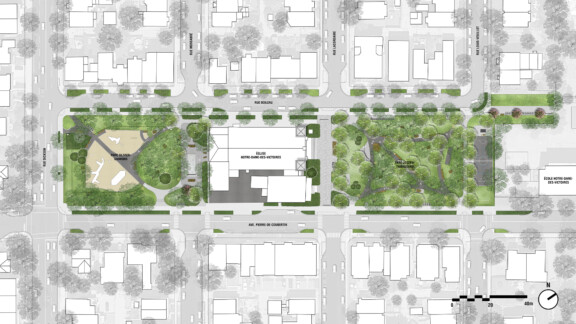
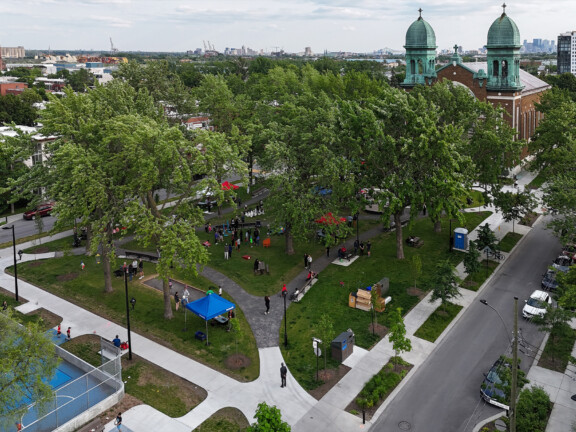
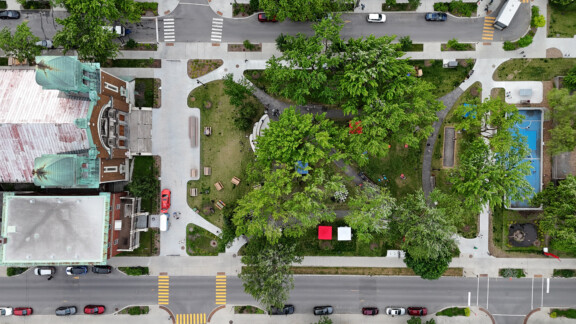
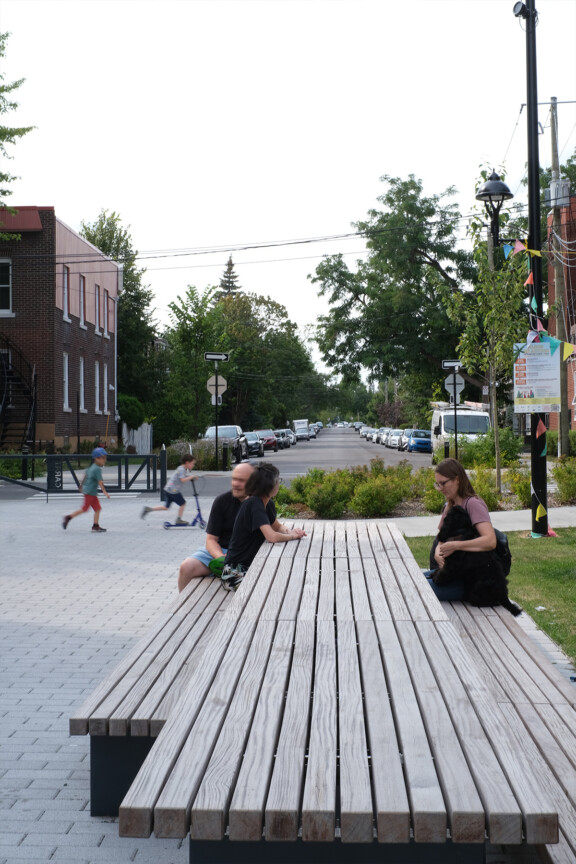
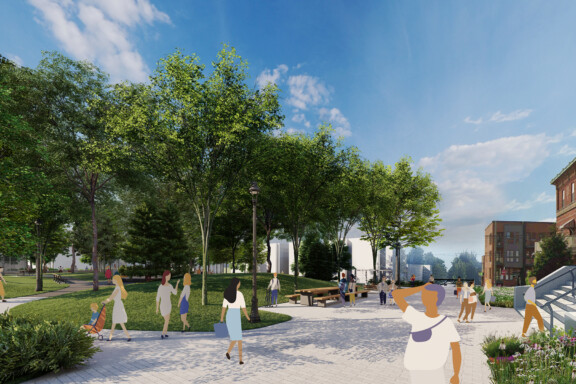
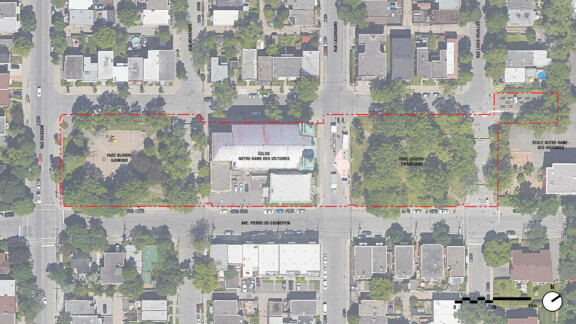
Carré Notre-Dame-des-Victoires, located in the heart of Montréal’s Mercier–Hochelaga-Maisonneuve borough, is a vibrant public space born of the consolidation of three city blocks, including heritage church and two neighborhood parks, into a cohesive whole. The renewal of the public realm builds on the site’s existing features and on the distinctive landscape character of each existing park. The pedestrianization of Monsabré, Lacordaire, and Louis-Veuillot streets unifies the block and transforms it into a welcoming neighbourhood hub for this active community.
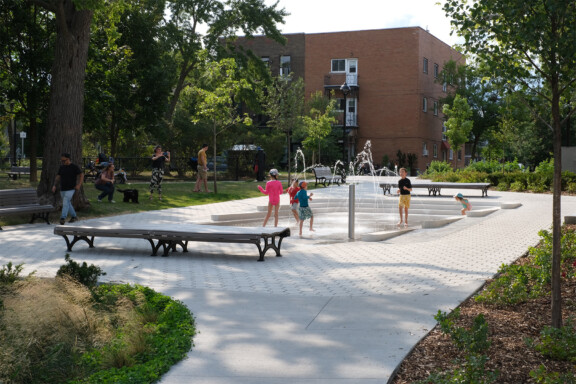
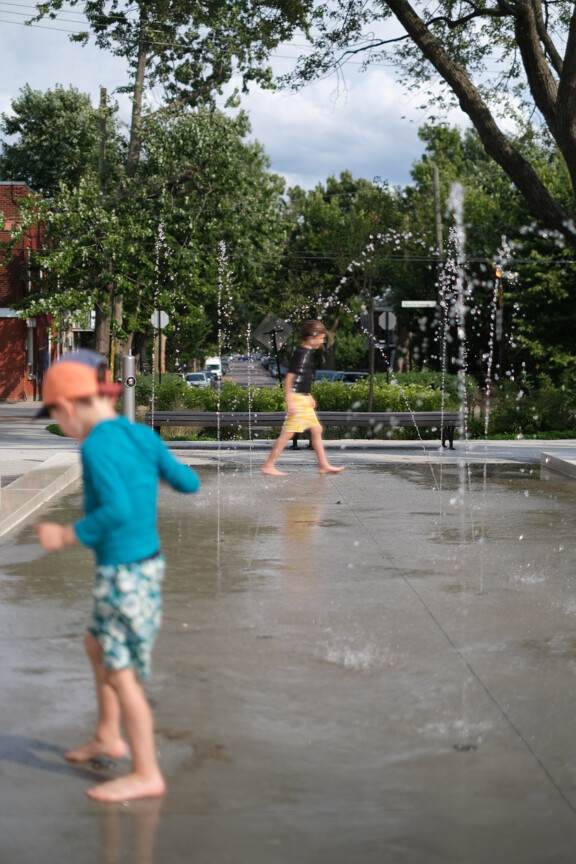
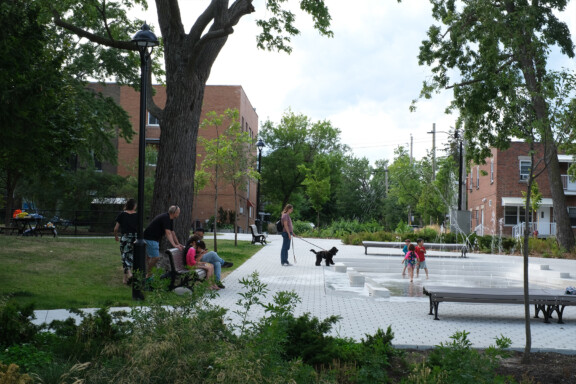
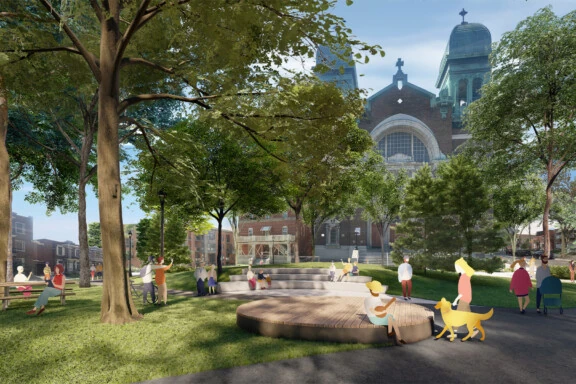
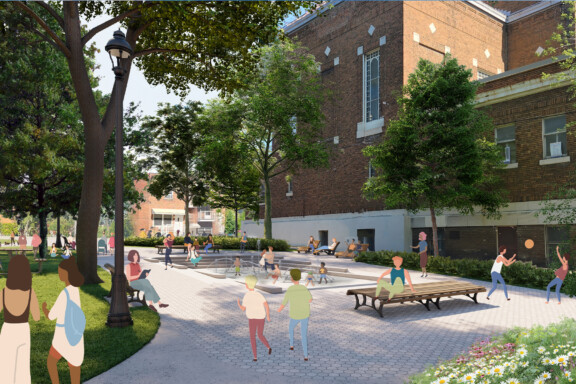
The project strengthens existing paths of travel, enhances tree planting and overall greening, and harmonizes urban furniture and lighting to ensure greater coherence and a renewed user experience. The interventions are organized around the church, which occupies the center of the consolidated block, and emphasize social interaction and a diversity of uses. In front of the church, Lacordaire Street is reimagined as a church forecourt and multifunctional civic space capable of hosting community gatherings, festivals, and other public activities. A small plaza bordered by amphitheater-style seating that takes advantage of the site’s natural topography, along with a multipurpose performance stage, is also integrated into Joseph-Thibodeau Park. Behind the church, the design adopts a more recreational and family-oriented character, featuring a cooling oasis to complement the existing playground features of Olivier-Guimond Park. Water play features, street furniture, vegetation, shade, and permeable surfaces all contribute to creating a welcoming space for relaxation and enjoyment by all. Father East, Louis-Veuillot street has been transformed into a more active, youth-oriented zone with a multisport court and ping-pong table, and the end of Rue Boileau has become a green and accessible pedestrian and bike arrival zone for the adjacent primary school.
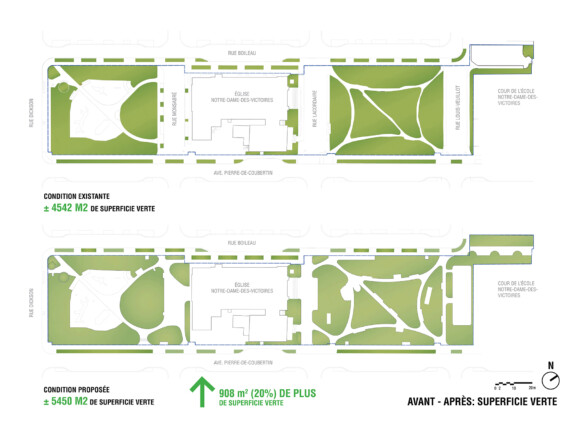
From an environmental perspective, climate resilience is enhanced through the addition of three rain gardens that allow for natural stormwater management, increased vegetated surfaces, and a reduction in urban heat island effects.